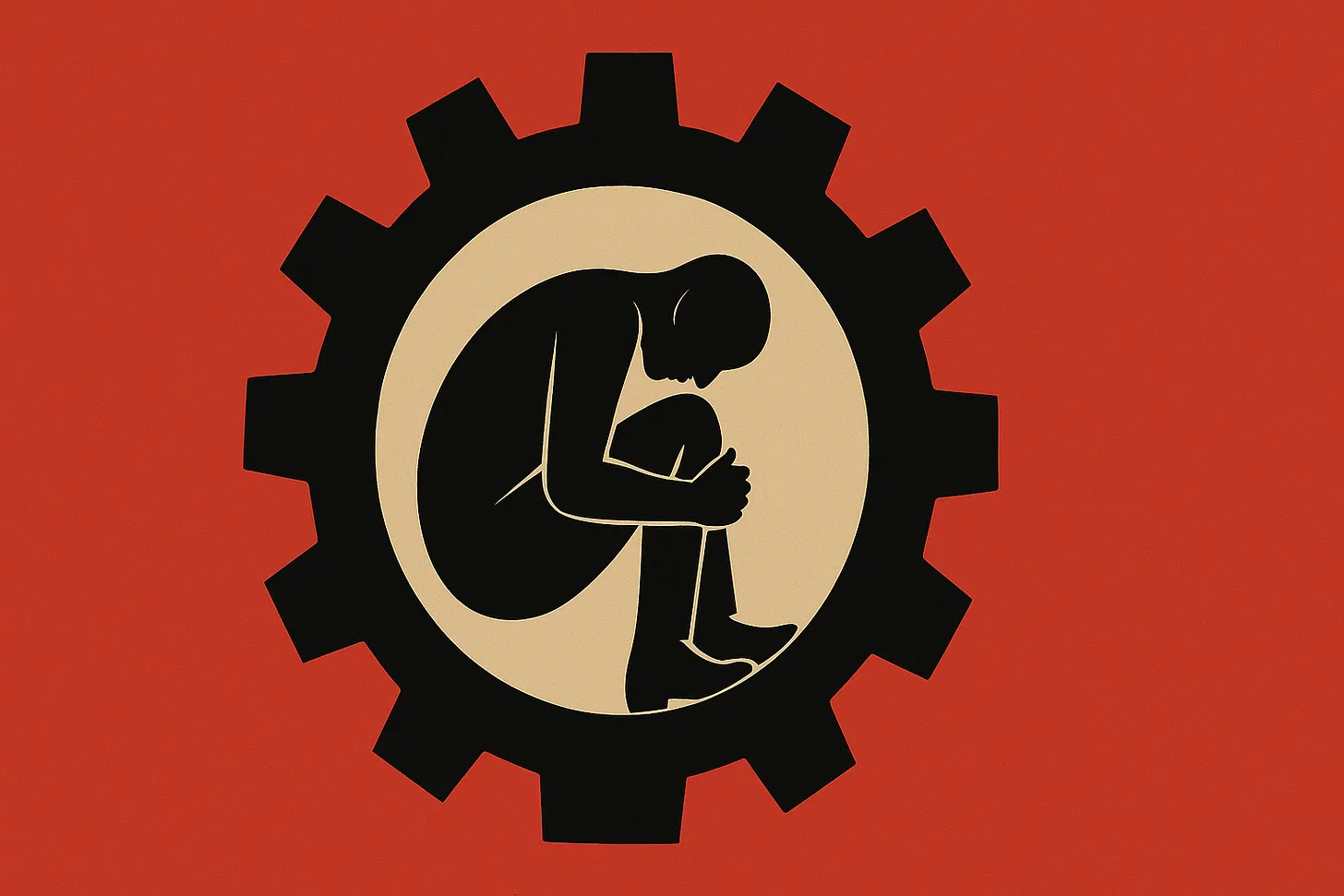
Clockwork Cage
They didn’t stop trying. They were trained that trying changes nothing.
“Laziness” is the convenient story. The mechanism is harder to admit: repeated obstruction teaches people that effort has little influence over outcomes, then treats their withdrawal as a character flaw.
Forms filed. Requests denied. Endless loops of “please hold.” Paperwork becomes a choke chain. Hours disappear into procedures that offer no meaningful path forward. Each failed attempt reinforces the same calculation: initiative costs more than compliance and changes less.
The workplace extends the lesson through surveillance. Keystrokes logged. Breaks timed. Dashboards glowing red. When measurable activity becomes the condition of security, workers learn to protect the metric rather than improve the work. Initiative introduces risk. Invisibility offers protection. Management mistakes the resulting compliance for a lack of drive.
Instability compounds the calculation. Restructurings erase progress. Promotions vanish. Contracts expire. Workers are asked to invest in futures their employers can reset without warning. With rewards uncertain and consequences immediate, withholding discretionary effort becomes rational.
What begins as adaptation hardens into expectation. People stop pursuing outcomes they have repeatedly been denied the power to influence. The distinction between choosing not to try and believing effort cannot matter grows harder to see from the outside.
Then the diagnosis arrives.
The exhaustion becomes evidence. The withdrawal becomes proof. Management identifies diminished initiative as an individual deficiency, separating the behavior from the conditions that produced it.
The institution responds with tighter oversight, narrower discretion, and more demands for measurable effort. Each restriction makes initiative less rewarding. Each retreat appears to justify another restriction.
The cage does not need people to surrender completely.
It only needs their adaptation to authorize another turn.