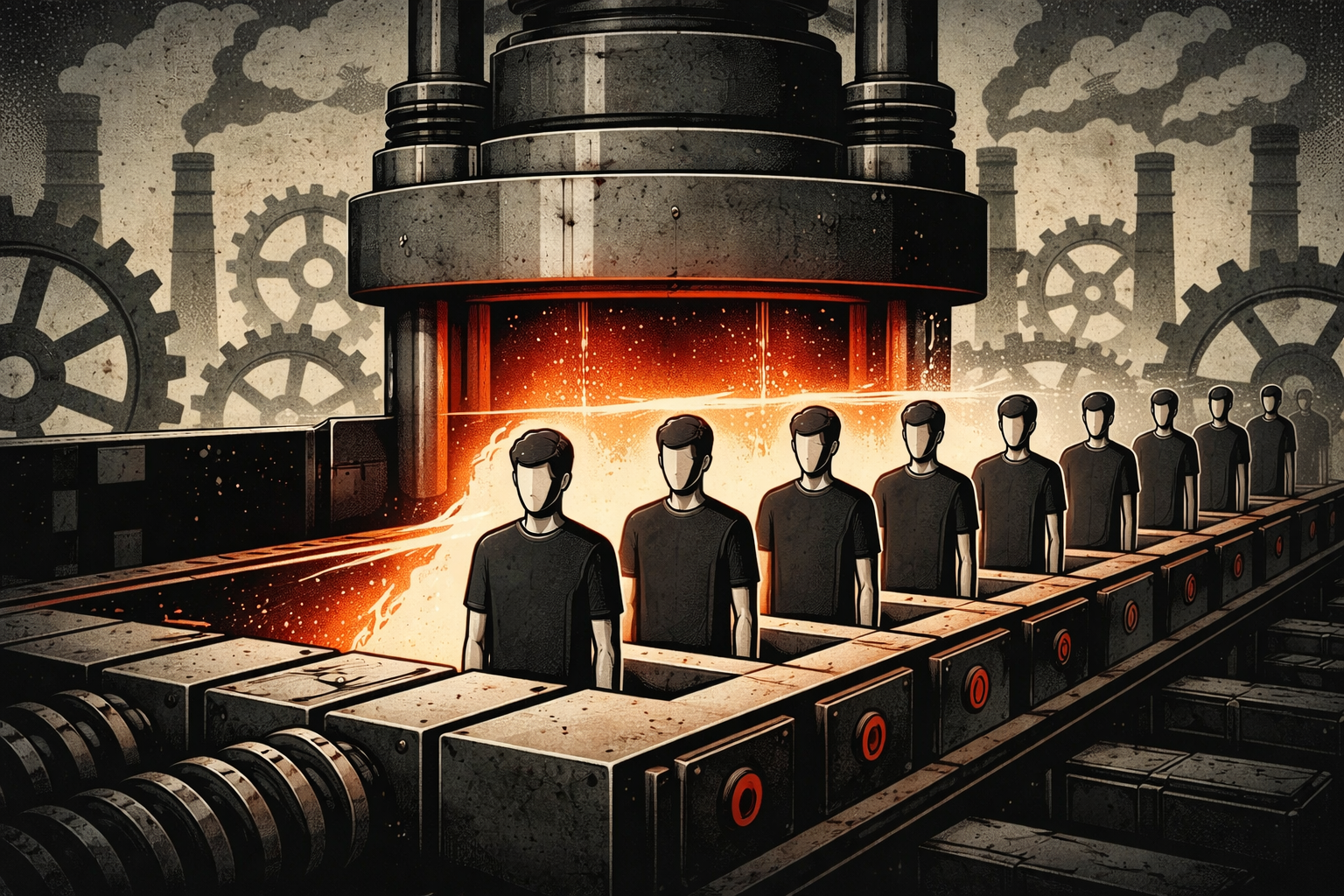
Formatted for Obedience
They called it school. What it mostly produced was compliance.
The architecture was simple. Bells dictated movement. Rows defined attention. Authority spoke from the front while everyone else faced the same direction. The structure trained a rhythm: wait, respond, repeat.
Knowledge moved through the system pre-packaged. Questions had predetermined answers. Success meant reproducing the approved pattern without deviation. Finish early and you waited. Think differently and you were corrected. The lesson wasn’t discovery. It was alignment.
Standardized testing completed the loop. Intelligence wasn’t what the system measured. The metric was reliability: how accurately you could store instructions and return them on demand. The better you mirrored the template, the higher the score.
Over time the habits hardened. Ask permission before speaking. Trust the authority delivering the material. Treat the schedule as immovable. Curiosity became something to contain so the process could continue without interruption.
The promise attached to all of this was opportunity. Work hard. Pass the tests. Earn the credential. The diploma was framed as freedom.
But the credential functioned differently. It verified that you could survive the process without resisting it. Sit still. Follow directions. Endure repetition. Deliver the expected output.
The system wasn’t designed primarily to expand autonomy. It was designed to produce predictable participants inside larger institutions that depend on the same behaviors.
Punctuality. Deference. Routine.
By the time the workforce appeared at the end of the conveyor, the formatting was already complete.