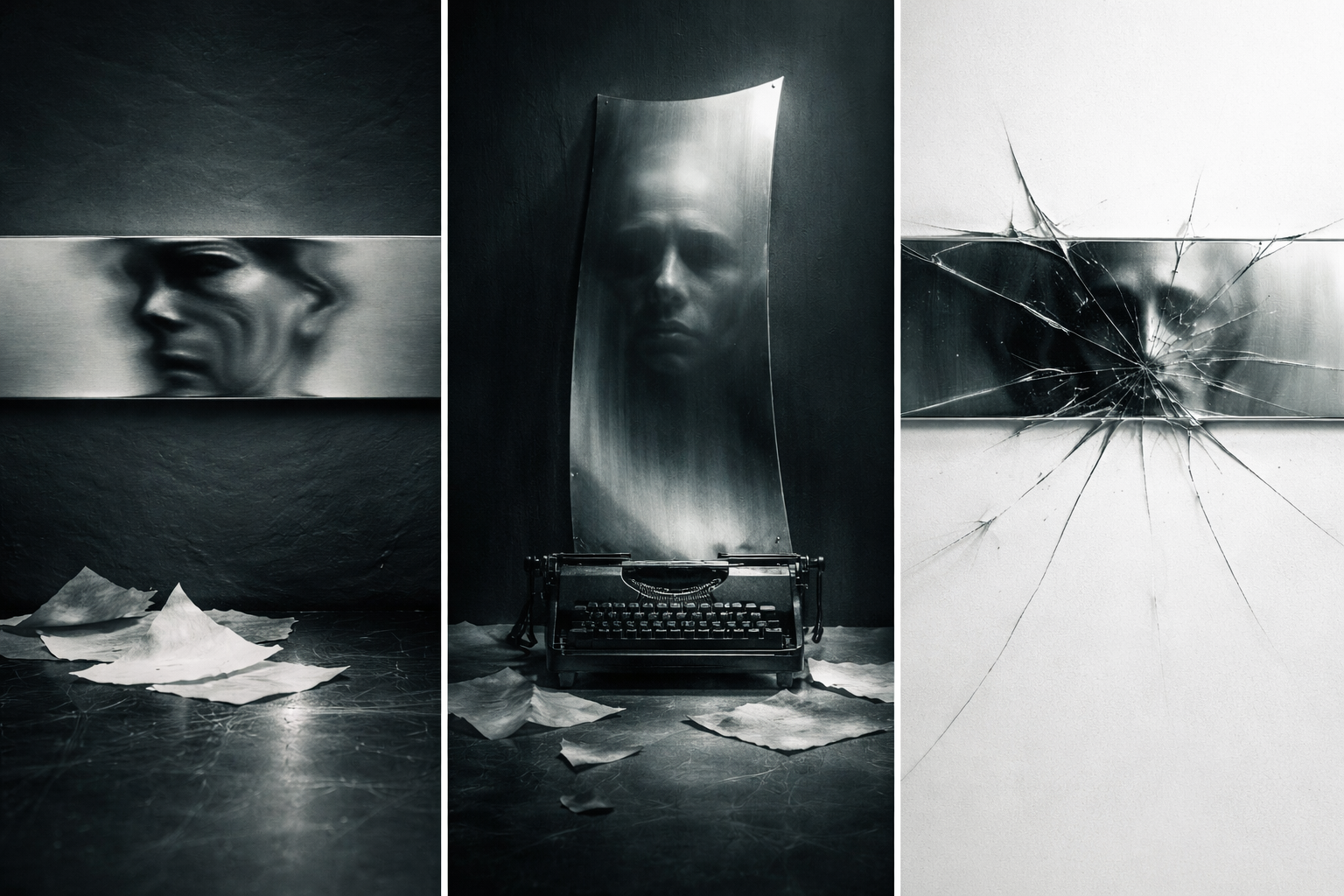
Slop Panic
“AI slop” has become the new garlic necklace — a charm lifted the moment a sentence lands too close to the bone.
No reading.
No examination.
Just the word, raised like a warding symbol.
The panic was never about machines.
It is a defense mechanism for human ceilings.
Most who chant it are not protecting art.
They are protecting their limits.
The accusation works because it requires no demonstration.
You don’t need to prove a sentence is weak if you can suggest it was generated.
Precision becomes “automation.”
Discipline becomes “prompting.”
Clarity becomes “fake.”
Not because those claims are true — but because the alternative is admitting the line held.
And that admission creates hierarchy.
Slop cannot arrest a thread.
Slop cannot force a reframe.
Slop cannot tilt a room into silence.
Only clarity does that.
When it appears, the reflex is immediate:
label the incision artificial and move on.
Not literary judgment.
Containment.
In a culture drowning in noise, the simplest way to bury a clean signal is to call it “generated” and pretend the label dissolves what it exposed.
But the deeper panic is simpler:
The fear isn’t that AI will flood the world with garbage.
The fear is that it reveals who already was.