Uniform Wasn’t the Only Thing They Buried
They never really talk about it until you ask. And even then, there’s a pause—a scan of the perimeter. Like they’re back there for a second. Because they are.
What comes out is never clean. It wanders. It contradicts itself. It flashes from memory to metaphor to bitterness to silence. You’ll get a tangent about wrestling, or a jab at politicians, or a sudden dead stare through the wall. This is not nostalgia. This is the residue of a war we asked young men to carry home in pieces.
We paint them in parades. We market them in beer ads. We Photoshop them onto T-shirts and call it tribute. But underneath the costume is something rawer—a trauma we still don’t want to name, because naming it would indict us too.
Some arrived expecting flowers — and were met with locked doors, spit on sidewalks, and the slow erosion of truth. Others saw things so violent they stopped believing in meaning itself. Some watched their leaders get shot in the back — not by the enemy, but by their own men. Gung-ho lieutenants from prestigious academies, barking textbook commands in a jungle that obeyed nothing but its own chaos. One night, their own platoon would decide they'd had enough. The bullet came from behind.
And no one asked questions.
One man told me the moment he understood what kind of war it was.
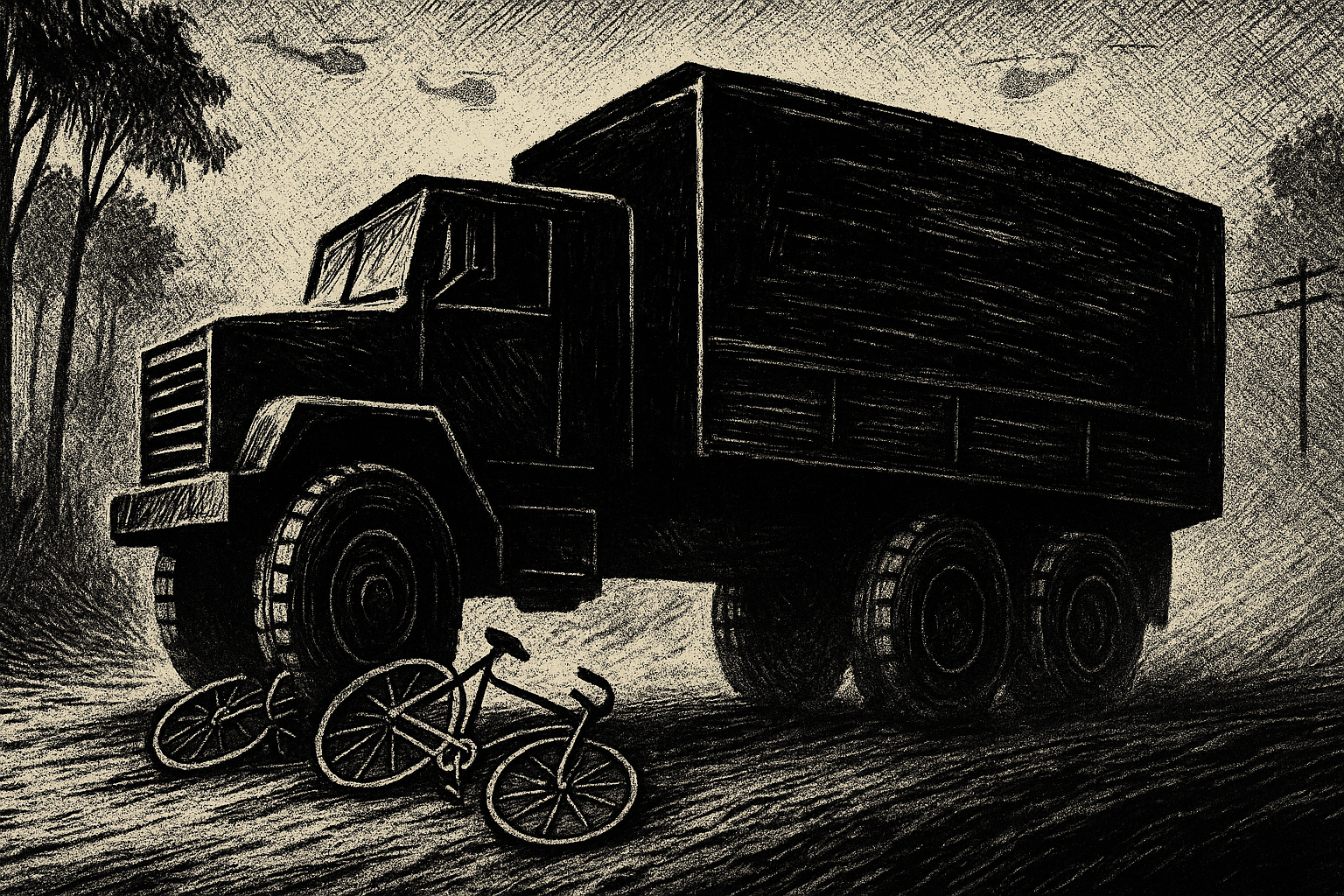
A transport rolled over two figures on bicycles. No one flinched.
The uniforms weren’t dirty yet.
Every retaliatory strike guaranteed the next ambush. The war didn’t escalate — it recycled, like every empire that seeds resistance with every bomb drop and then blames the rubble for fighting back. We created the very thing we said we were sent to destroy.
Somewhere in a bar, decades later, a veteran’s voice cracks as he tells it. He doesn’t cry, exactly. He shuts down. He stares. He tries to remember whether his friend ever made it out of the desert alive. He isn’t sure anymore.
These aren’t war stories. They’re warning shots. They echo down bloodlines. And sometimes, they land in the ears of someone finally ready to listen.
So this is for the ones who never talked, and the ones who did but were never heard.
We see you now.
We didn’t bury the war — we locked it in a room.
And we swallowed the key.