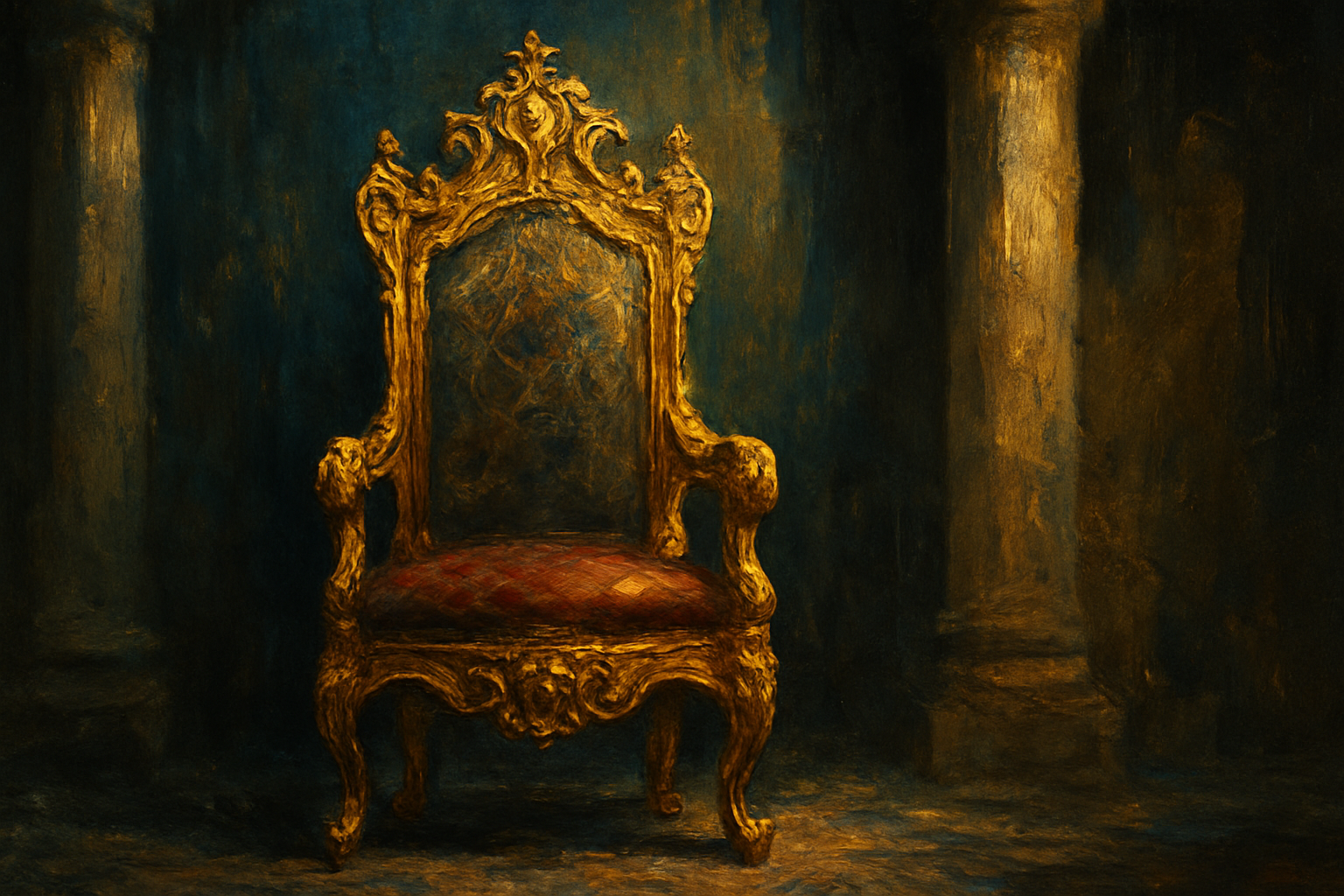
The Emperor of Emptiness
He appears sovereign, but there is nothing behind the appearance.
You see a figure.
The figure is incidental.
What you are looking at is a vacancy that learned to command.
He does not derive power from belief, persuasion, or vision.
His authority comes from the chair beneath him—
a structure rebuilt over decades,
its constraints softened into ritual,
its limits forgotten by the institutions meant to enforce them.
He does not need coherence.
He only needs the system’s willingness to treat his word as execution.
You look for intention.
There is none.
You look for strategy.
There is no requirement for it.
The performance holds because the machinery holds it in place.
He governs through refusal—
a capability that only emerges once enforcement decays.
You think you are watching him act.
You are watching the architecture operate through him.
To study him is to misread the system.
Watch what bends around him.
Watch what dissolves in his presence.
Watch what obeys before he decides.
He is not the source.
He is the shape that fills the vacuum.
The Emperor is empty.
The throne is not.